CASE STUDY No. 7:
Lead Toxicity in Soil
Problem:
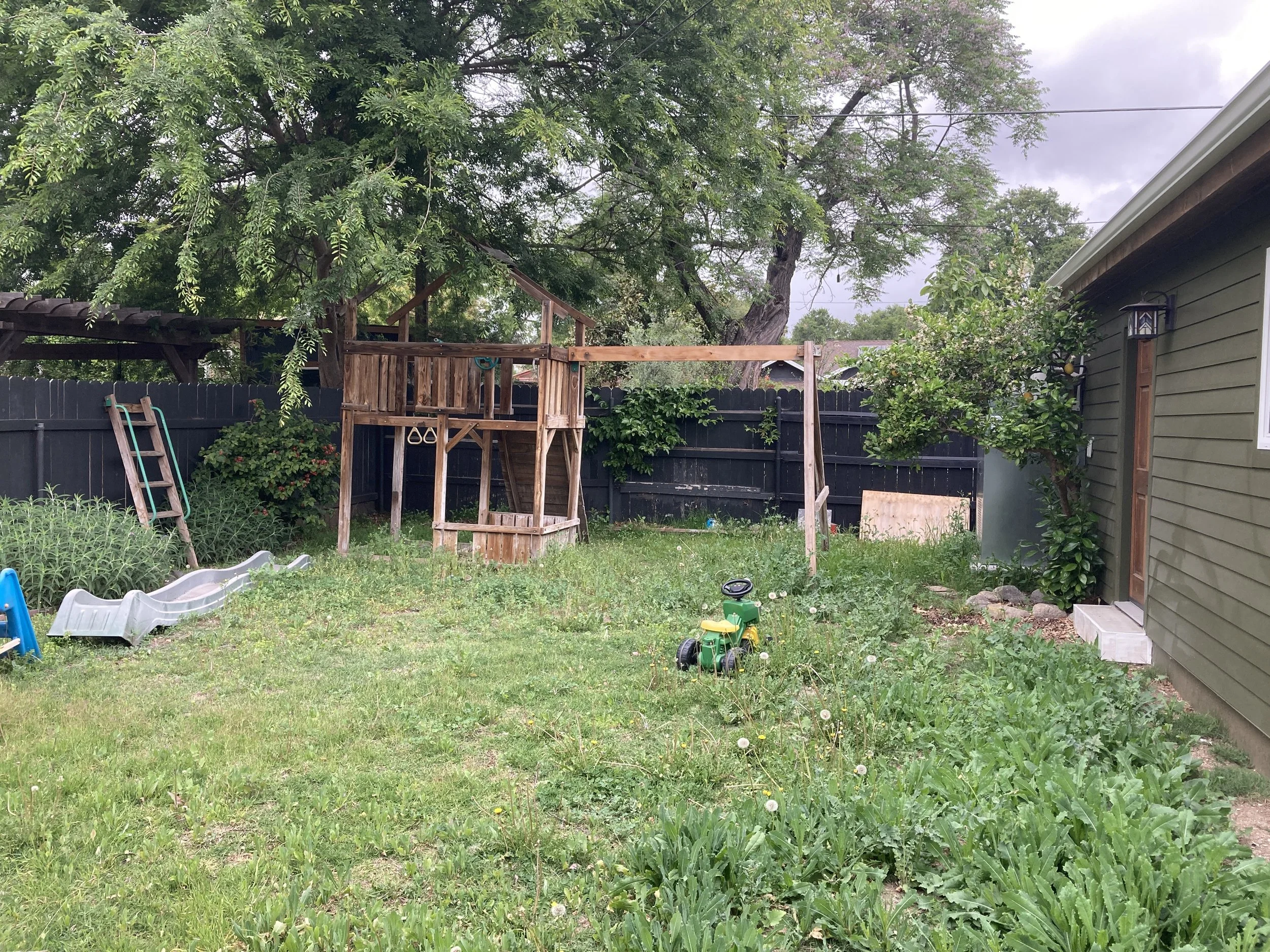
A family with toddlers wanted to build a space where their children could play and explore. Their backyard had become overgrown with weeds, but more concerning was the fact that their soil was heavily polluted with lead. After the local Eaton fire, the family did a soil test and the results that came back showed the highest level of lead toxicity I’d ever seen - over 900 ppm (parts per million).
Although the preferred lead level for human habitation is 0 ppm, the normal lead level of soil across America (due to decades of using leaded gasoline) is 10-50 ppm. There is no chemical remediation for lead, and unlike some toxins, it won’t wash through the soil with water. Lead just sits there, and when it gets kicked up and inhaled, it can lead to neurological damage, especially in young children.
Solution:
Thankfully, the family had already lined up a contractor to work with. As I pushed out designs for different portions of the property, the contractor got to work installing, which really sped this project along. The top six inches of soil were removed and disposed of as toxic waste. New soil was brought in and a new lawn was plotted - smaller than the old lawn, but big enough for kids to play. Planting beds were installed along the borders, stepping stones created a clear path through the space, and cafe lights were hung from poles to illuminate the backyard at night. The family rehabilitated their play structure, and the result was a beautiful and safe place to enjoy.
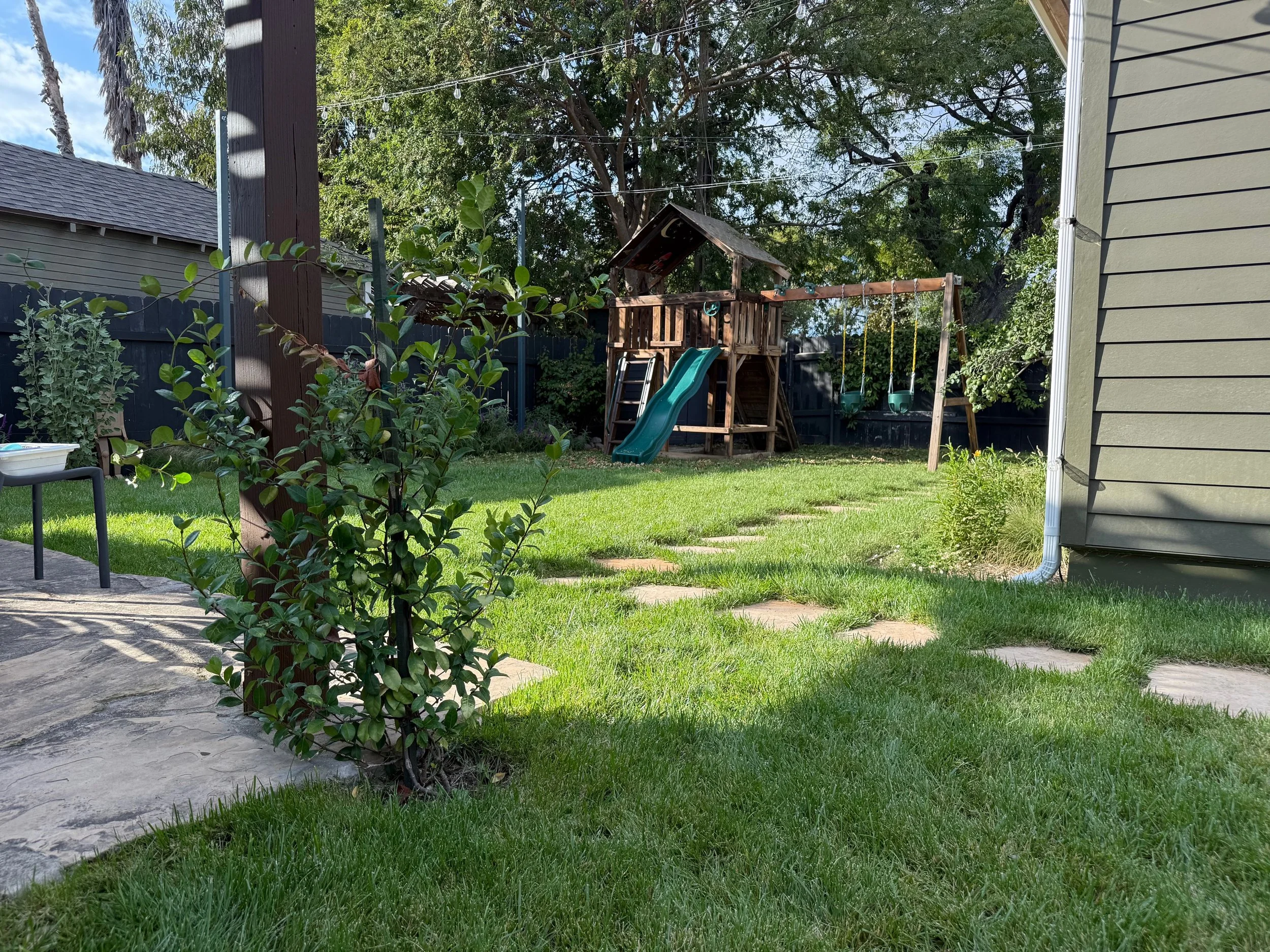
After
Before